



Seventeen clubs said no. The NRL did it anyway.
One rule let teams choose to kick off or receive after conceding. Both sides in the first trial picked kick off anyway, same as always.
 Ian Hopkinson
2 September 2026 · 2 months, 1 week ago
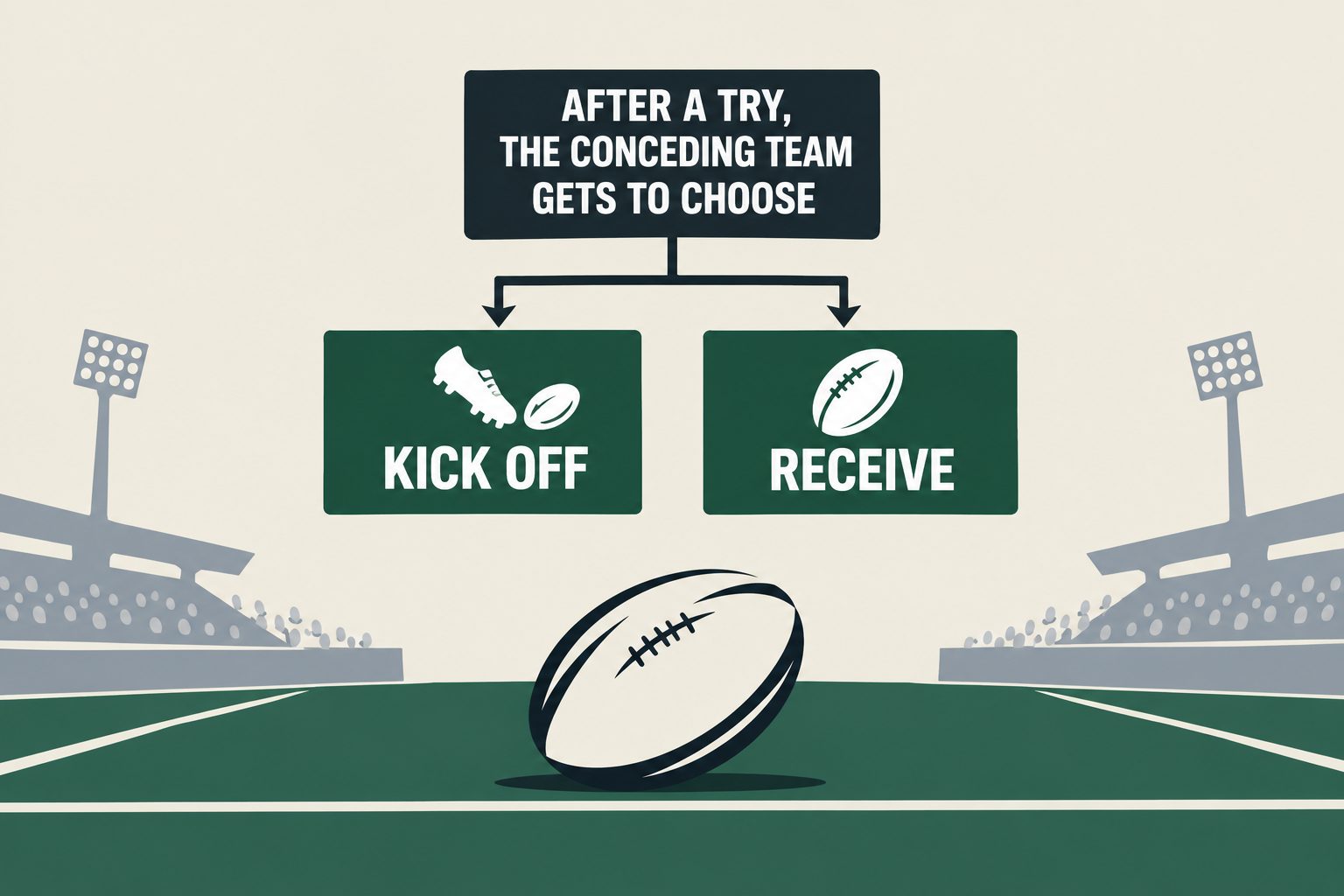
The NRL asked every club what they thought of a new kick-off rule. Seventeen clubs said no. The NRL trialled it anyway.
What the rule actually changes
Rugby league has always worked the same way after a try. The team that conceded it kicks off and has to defend again straight away. Under the proposed change, that flips. The conceding team gets to choose, kick off themselves, or receive the ball instead.
It's a version of how the NFL does it, minus the choice. In the NFL the scoring team always kicks off. The NRL's version hands the decision to the team that just got scored on, which is either a smart bit of tactical nuance or a solution looking for a problem, depending who you ask.
Why the NRL wanted it
The pitch was about field position and unpredictability. Long spells of one-sided possession are part of why some games turn into blowouts. Giving the conceding team a choice was meant to break that pattern up, let a team under pressure claw back field position instead of being forced to defend on the back foot again immediately.
Why every club except one pushed back
All 17 clubs signed a joint letter to the ARLC opposing the change before it went anywhere near the field. Their argument was straightforward. This isn't a tweak. It changes the fabric of the game, and that's not something to do lightly.
Wayne Bennett was one of the only voices in the game publicly in favour, reportedly one of just six coaches who backed it. Everyone else wanted it left alone.
The compromise
Peter V'landys and the Commission didn't kill the idea outright. They pulled it back from a full rollout and pushed it into trial games instead, specifically ones with no bearing on the finals race, late in the season, where the risk of the experiment blowing up a genuine contest was as low as it could get.
The first live test landed on the Broncos hosting the Storm in round 26. Last year's Grand Final rematch, reduced this year to a dead rubber for both sides, which made it the perfect low stakes stage for the NRL to run its experiment in front of a big Thursday night crowd.
What actually happened on the night
This is the part that makes the whole thing worth writing about. Given the choice to kick off or receive after conceding, both teams kept choosing to kick off. Which is what happens under the old rule anyway. Fox League's commentary team spent parts of the broadcast openly wondering whether either side even wanted to be part of the trial, with one commentator floating that the teams might have been quietly protesting the whole thing by simply refusing to use it as intended.
Storm coach Craig Bellamy wasn't shy about his scepticism beforehand either, saying he needed to see something happen before he'd be convinced the change was worth making. Broncos coach Michael Maguire was just as measured, saying he liked the game the way it already was and didn't think it needed much tinkering.
If the idea was to prove the rule adds unpredictability and tactical depth, round 26 mostly proved the opposite. Two NRL clubs were handed a genuine strategic option and both quietly declined to use it.
Still not settled
The trial rolls into round 27, the last test before the NRL makes a call over the off-season. Some of the concerns raised go beyond just "does anyone want to use it." There's a real wrinkle around draws, where a team's decision to kick off or receive could be made pointless the moment the other side slots a simple conversion and changes the equation entirely.
Why this one matters more than it looks
On the surface this is a fairly technical rule change most casual fans will never notice happening. But it's part of a bigger pattern this finals build up has made obvious. The NRL is testing changes to its own product in real time, in real games, right before the part of the season that matters most. The wildcard conversation. Nine players rested in a rivalry match. Now a kick-off rule that all but one club voted against, quietly ignored by the two teams handed the choice to actually use it.
None of these experiments have been forced through against genuine resistance. But all three are happening in the same fortnight, which says something about how much appetite there currently is inside the game for changing things that have worked exactly the way they are for a very long time.
Whether the kick-off rule survives past this season is still an open question. What's already clear is that when you actually hand players and coaches a new option on the field, they don't automatically take it just because it's there. Sometimes the old way wins simply because nobody in the moment wanted to be the one who changed it first.