



The NRL Is about to make the same call the AFL just did
Sudden death for seventh through tenth. A losing record that could still mean finals footy. The NRL is weighing the same wildcard format the AFL just lived through, and the early verdict from both codes is split right down the middle.
 Ian Hopkinson
2 September 2026 · 2 months, 1 week ago
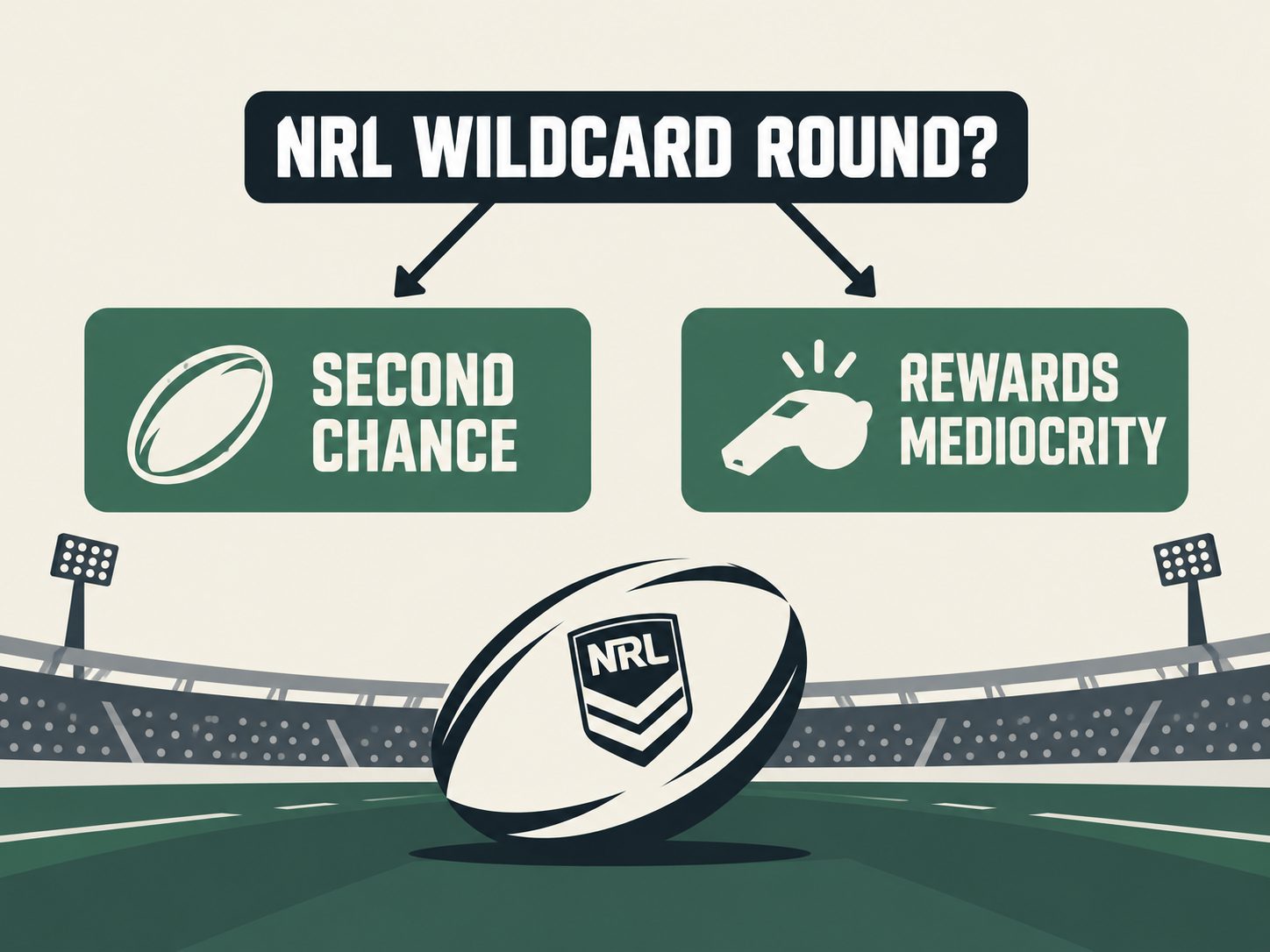
The NRL is talking about bringing back a wildcard round. The AFL's already living with one.
That timing isn't an accident. The NRL watched what happened in 2026 before opening this conversation, and the early read from inside rugby league is split straight down the middle, same as it was across the border.
What's actually being proposed
The idea on the table is straightforward. Seventh plays tenth, eighth plays ninth, both sudden death, the winners go through and turn what used to be a top six into a top eight. Lose that game and the season's over on the spot.
Under the current NRL ladder, that would mean the Sea Eagles and Bulldogs, sitting ninth and tenth, could make finals footy with a losing record. That's the detail everyone against the idea keeps coming back to.
Rewarding mediocrity
Braith Anasta has been one of the clearest voices raising the obvious question: why are we rewarding mediocrity? It's a fair hit. A finals system is supposed to mean something. If a team with more losses than wins can play finals football off the back of a wildcard weekend, that cheapens what making the eight used to represent.
A second chance for the unlucky
Gorden Tallis sees it differently, pointing to how brutal a modern NRL season is on player depth. Teams copping heavy injury tolls early can lose months before they ever field their best twenty-two. A wildcard structure gives a club that stumbles out of the gate through no fault of its roster a genuine shot at being relevant come finals time, instead of the season being over by round eight.
What the AFL's first year showed
The AFL brought in its own wildcard round in 2026, the first change to its finals system since 2000. The AFL Fans Association reported 77 per cent of supporters opposed it before a ball was even kicked. Geelong coach Chris Scott didn't hold back either, dismissing the whole thing as something the AFL had just made up to chase extra broadcast revenue.
But the season played out with at least one result that's hard to argue against. Carlton started 1-8, a form line that would have ended their season by the halfway mark under the old system. Instead they went on a genuine run and made finals anyway. Whatever you think of the format, that's exactly the kind of story it's built to produce.
The commercial motive critics point to isn't really in dispute. AFL leadership has been open that protecting the value of its broadcast deal, which runs out in 2031, was central to the decision. Fewer dead rubber rounds, more games with something riding on them, more valuable timeslots to fill. That's a business case, not a football romance, and the AFL hasn't pretended otherwise.
What it means for tipping
Nobody arguing about mediocrity and integrity is thinking about this bit. An extra week of finals is an extra week your workplace, school or club tipping competition stays alive.
Group tipping comps live and die on how long people stay engaged. A shorter finals series means the comp winds down faster and the group chat goes quiet earlier than anyone wants. A wildcard round, whatever it does to the ladder's integrity, adds a genuine extra week where every tip still matters, more teams are still alive, and more people in the group have a reason to check the ladder on Monday morning.
That doesn't settle the fairness argument either way. But if the NRL goes down this road, it's worth knowing it's not just administrators and broadcasters who benefit from one more week of footy that counts. Every group still tipping together does too, right through to the last round.
Where this lands
Nobody's decided anything yet. The NRL is still working through whether this is worth doing, and the AFL's own experiment is barely a season old. But the shape of the debate is already familiar. Integrity against opportunity, tradition against revenue, two competitions comparing notes on which one gets it right.
Whichever way the NRL lands, the AFL's 2026 season is the closest thing anyone has to a live trial run. Worth watching what they decide, not just what they say while they're deciding it.