
The NRL's coming storm. Nine months later, here's what actually happened.
Expansion, the bunker, concussion policy. Three storm clouds forecast for 2026, checked against what actually played out. Two turned out better than feared. One is still the real fight.
 Ian Hopkinson
3 September 2026 · 2 months ago
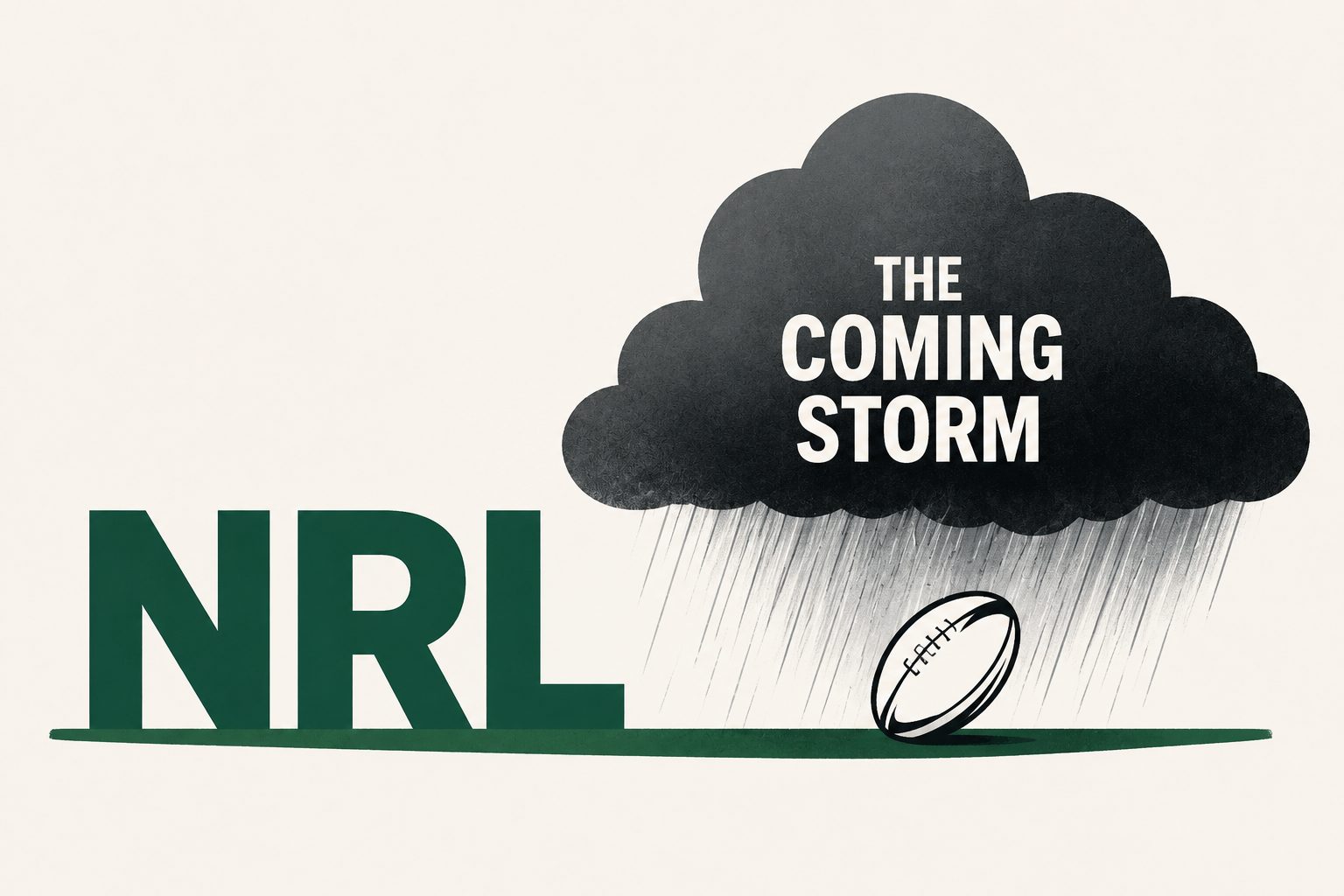
Back in December, three storm clouds were forecast for the NRL's 2026 season. Expansion stretching the talent pool too thin. The bunker eroding trust in the product. Concussion policy not matching concussion reality.
Nine months on, worth checking which of those actually landed.
Expansion: the dilution fear didn't really hold up
The worry was specific. Perth's early recruitment drive was struggling, their first real breakthrough was halfback Toby Sexton, and the concern was a competition growing faster than the player pool could support.
That's not how it played out. By August, the Perth Bears had locked in Morgan Smithies, Scott Sorensen, Siosifa Talakai and Corey Horsburgh, an Origin prop straight out of Canberra's forward pack, plus Gehamat Shibasaki, who scored a double in last year's Grand Final before signing with the Bears on a two year deal worth half a million a season. That's not a club scraping the bottom of the market. That's a genuinely credible inaugural roster.
There's been one real wrinkle. General Manager of Football David Sharpe resigned in April, and the club hasn't announced a replacement yet. Worth watching, but it's a leadership gap, not a talent one.
The other expansion piece, the Papua New Guinea franchise, has also taken real shape since December. It has a name now, the PNG Chiefs, a board, a coach in Willie Peters, and $600 million in Australian government backing over ten years. Marquee signings like Jarome Luai are locked in years before the club plays its first game in 2028.
Verdict: the expansion fear was reasonable in December. It just didn't come true.
The bunker: genuinely better, not fully fixed
This one's more mixed. Some real changes have gone in. The bunker's remit has been tightened so it can't overturn an on-field call unless the incident clearly meets the threshold for foul play, which was specifically meant to stop slow-motion nitpicking and hand authority back to referees in the moment.
That's a real fix, and it's had a real effect. But controversy hasn't disappeared. Round 20 alone produced enough contentious bunker and referee calls to fill a full episode of NRL 360 arguing about it. The system is better calibrated than it was in December. It's not the kind of fixed where nobody's talking about it anymore.
Verdict: progress, not resolution.
Concussion: still the most serious of the three, and still evolving
The independent doctor model that was already controversial in December is still in place, and the NRL kept adjusting it through the year, aiming to get players off the field faster after a head knock rather than leaving the call sitting with club medical staff mid-game.
Wayne Bennett hasn't let up on his position either, arguing the whole system should sit back with the clubs, backed by fines and points penalties, rather than an independent doctor making the call. That's a genuine, unresolved disagreement between one of the game's most respected coaches and the league's own medical framework.
What's notable is which direction the wider sporting world is moving. The AFL spent February working out how to give its own concussion spotters the power to pull a player from the field independently of the club, essentially catching up to a model the NRL had already been running for several seasons. Whatever you think of how the NRL's version works in practice, the other major code is now heading toward the same starting point, not away from it.
Verdict: still the most serious issue of the three, but the NRL wasn't wrong to have already moved on it early.
Where that leaves things
Two out of three storm clouds have mostly cleared. Expansion turned out to be less of a threat than feared, with Perth building a squad that's actually strong and PNG's entry now fully real rather than theoretical. The bunker is meaningfully better calibrated, even if it's not controversy-free. Concussion policy remains the genuine, ongoing fight, the one where the NRL got there early but still hasn't landed on a version everyone in the game agrees with.
Nine months ago, this read like three separate threats to the same season. It's turned out to be one real ongoing challenge, and two problems the game handled better than the doom-laden headlines suggested it would.